



Kai: Igor Chikishev
Gerda: Albina Sharafutdinova
The Snow Queen: Anna Matis
The Lamplighter: Grigory Chernetsov
The Reindeer: Grigor Verner
The Grandmother: Varvara Solovyova
The Old Robber Woman: Bakuri Kalichava
The Little Robber Girl: Tsvetana Omeltchuk
World premiere: 24 December 1980, Kirov Opera and Ballet Theatre (Mariinsky Theatre)
Premiere of this production: 30 November 2016, Mariinsky Theatre
Premiere of the updated version: 2 December 2025, Concert Hall
Performance running time: 2 hours 20 minutes
The performance has one interval
There are not many operas written specifically for children: the genre itself, with its conventions and traditions, hardly seems suited to an audience of restless youngsters. St Petersburg composer Sergei Banevich, who chose children’s music as his artistic path, set out to challenge this assumption. The Story of Kai and Gerda, his most celebrated work, is a children’s opera written according to all the laws of a fully fledged musical drama.
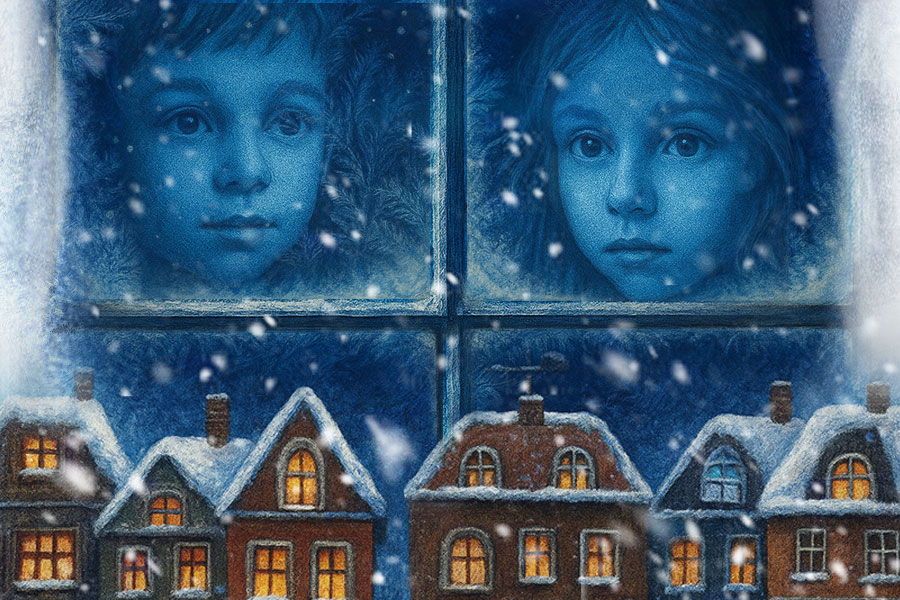
The plot is drawn from Hans Christian Andersen: his The Snow Queen was transformed into an operatic libretto by poet Tatiana Kalinina. The action needed to be concise, the episodes visually vivid, and the central idea clear to an audience aged six and up. The narrative of The Story is interwoven with the reflections of the wise Lamplighter; the score incorporates dance interludes and the symphonic tableau Flight on the Reindeer. While the vocal parts are written for adult performers, the opera’s musical language – grounded in aria-like utterance – remains accessible to young listeners.
In the finale the creators bring two female archetypes face to face: love and death, Gerda and the Snow Queen, locked in a struggle for the human heart. Paradoxically, this musical parable, composed in the late 1970s, appeals to the Christian underpinnings of Andersen’s fairy tale – motifs that were omitted from Soviet-era editions (in the original story God and the Devil battle for Kai’s soul).
“This opera is addressed equally to children and adults; it is about losing and rediscovering oneself, much like the great novels of formation. When I think of Kai, I also think of today’s teenagers with shards of the ‘mirror of evil’ in their hearts – those who do not know what love is, who do not know the value of life, who are merciless and unforgiving,” reflects the composer.
The title The Story of Kai and Gerda first appeared on the playbills of the Kirov (now Mariinsky) Theatre in 1980. The opera remained in the repertoire for a decade and was performed more than one hundred times. Later Yury Alexandrov’s production was revived, featuring young Anna Netrebko, Leonid Zakhozhaev and Evgeny Nikitin. At Netrebko’s initiative a Viennese version of the opera with a German libretto (Die Schneekönigin) was performed for two summer seasons at the Haydn Hall of the Esterházy Palace near Vienna.
The opera has enjoyed a particularly fortunate stage life in Russia and Ukraine, with productions in Chelyabinsk, Yekaterinburg, Perm, Kyiv, Pskov and Novosibirsk. In the 2025–26 season The Story is performed at the Bolshoi Theatre of Russia and the Samara Opera and Ballet Theatre, at St Petersburg’s Mariinsky Theatre and its branches in Vladivostok and Vladikavkaz, at the Bolshoi Theatre of Belarus in Minsk, and at the State Theatre in Košice, Slovakia.
The Mariinsky production was created by masters of fairy-tale theatre: director Alexey Stepanyuk and designer Elena Orlova. In 2025 the production was adapted for the stage of the Concert Hall. Leyla Abbasova





| user_name | | Exit |

The highlighting of performances by age represents recommendations.
This highlighting is being used in accordance with Federal Law N436-FZ dated 29 December 2010 (edition dated 1 May 2019) "On the protection of children from information that may be harmful to their health"


