










World premiere: 22 October 1899, Mamontov’s Opera on the stage of the Solodovnikov Theatre, Moscow
Premiere at the Mariinsky Theatre: 30 October 1901
Premiere of the updated version: 24 July 2025, Concert Hall
Running time 3 hours 10 minutes
The performance has one interval
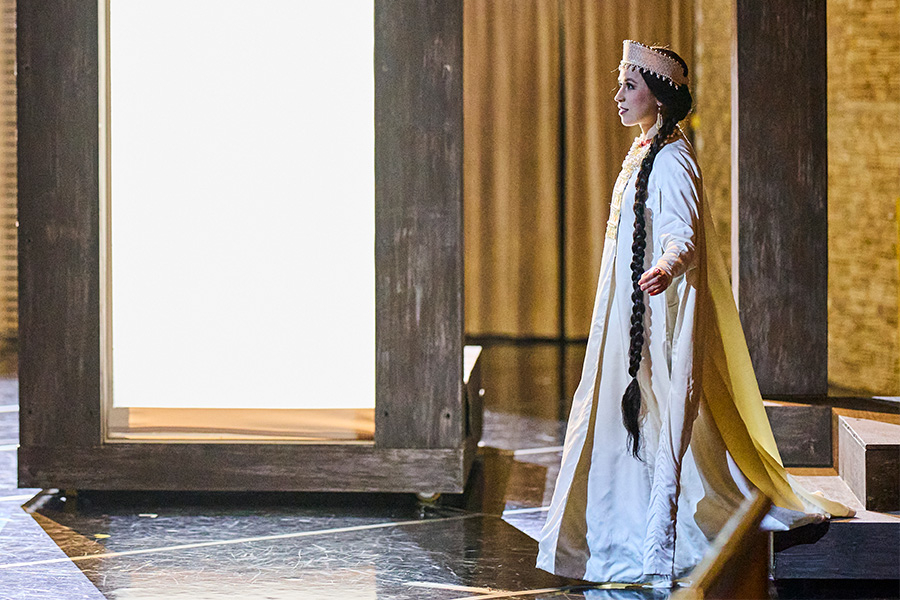
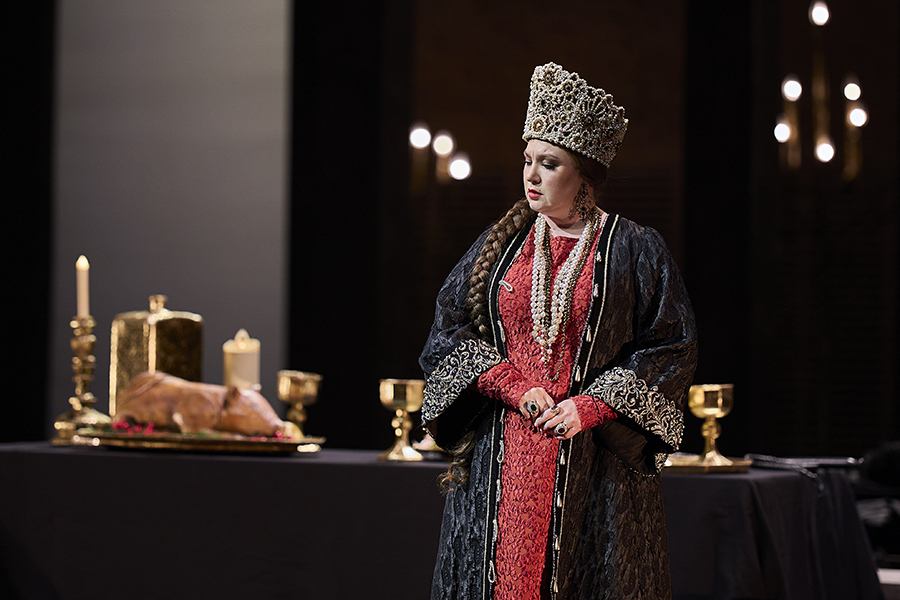
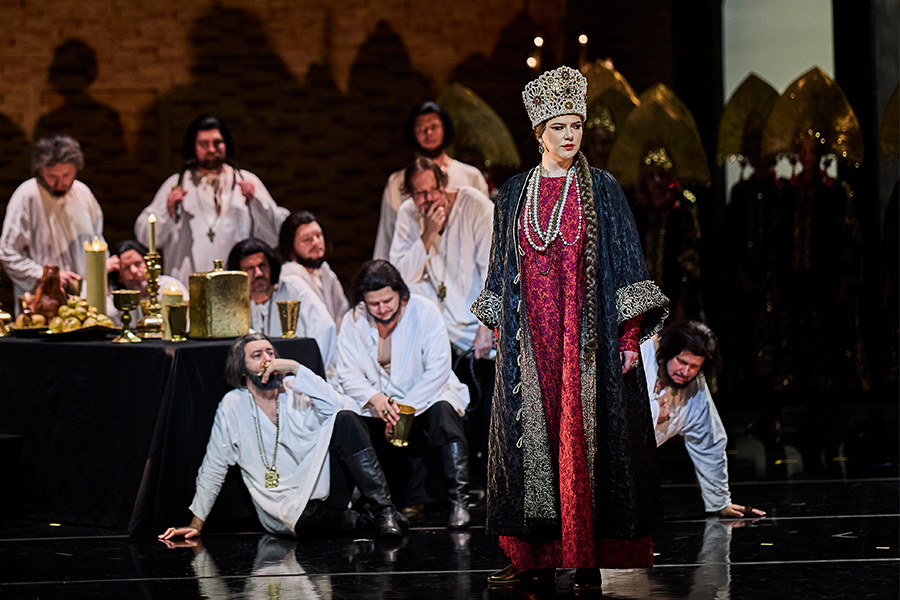
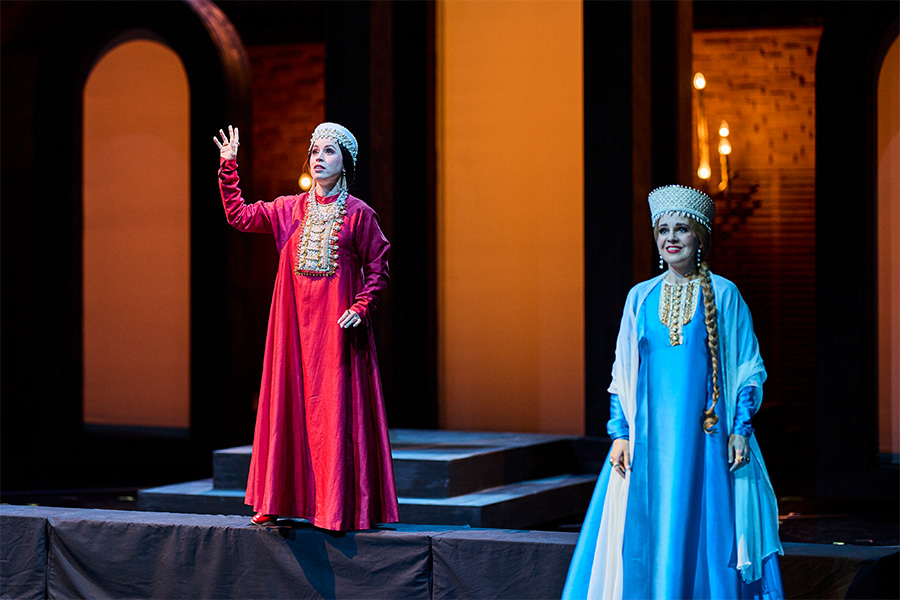
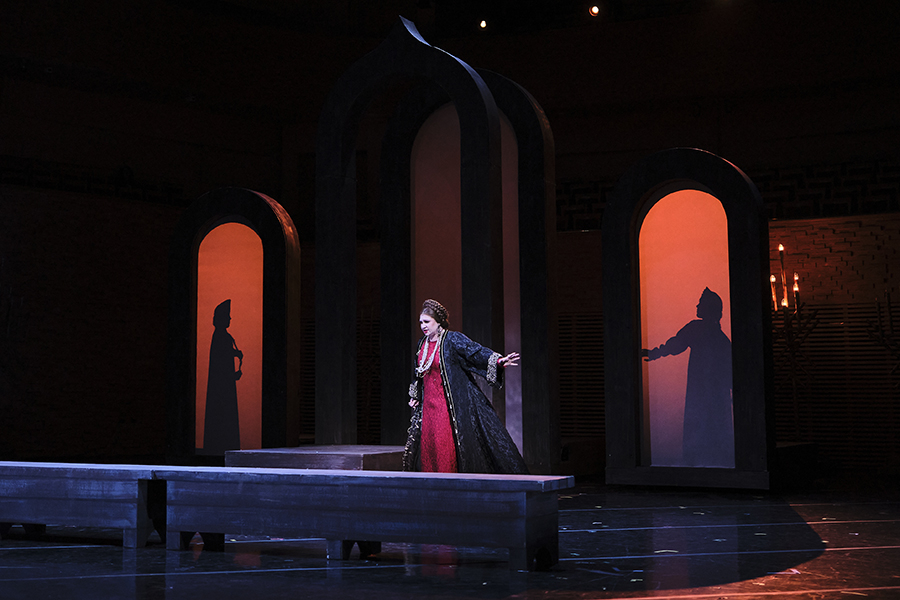
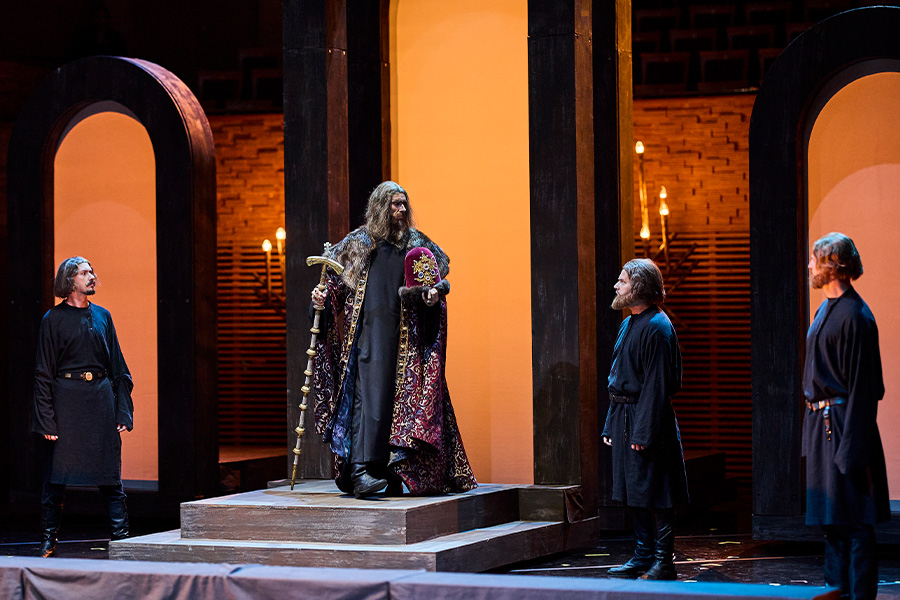
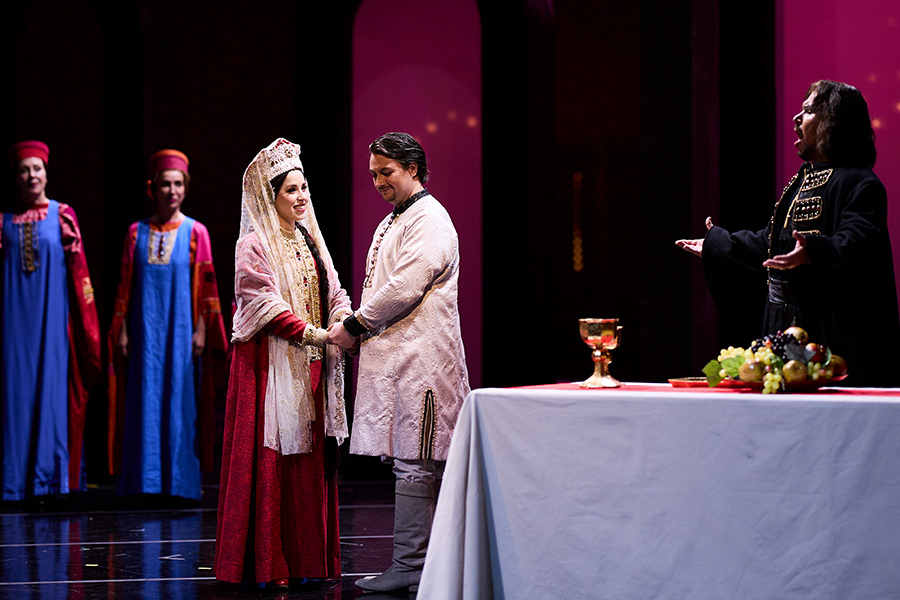
“Live unnoticed!” the ancient Greek philosopher once advised. Stay far from kings and courtiers. Had Ivan the Terrible never set eyes on the beautiful Marfa Sobakina, she might well have lived a long and peaceful life. But fate, having sifted through two thousand candidates, settled on Marfa – and two weeks after her wedding to the Tsar, the chosen bride was dead. Lev Mei, the Russian nobleman, writer, and graduate of the Tsarskoye Selo Lyceum, retold the story of the Tsar’s third marriage in his own way. In Mei’s play, before becoming the Tsar’s bride, Marfa is already promised to another – young boyar Ivan Lykov – and becomes the obsessive desire of the oprichnik Grigory Gryaznoy. Mei borrowed all the characters’ names from historical sources except one: Lyubasha. Unlike the others, Lyubasha has neither a patronymic nor a family name; she is merely Gryaznoy’s mistress – nothing more. The quartet of central characters seems almost predestined for operatic treatment: the angelic soprano in love with a noble tenor, the vengeful mezzo disruptor and the dark baritone rival. Rimsky-Korsakov had considered Mei’s drama as a libretto source as early as the 1860s but undertook it only in the late 1890s. The Tsar’s Bride became his ninth opera. Surrounded by his “fairy-tale” works – Sadko (1896) and The Tale of Tsar Saltan (1900) – it differs from them sharply: not only through its “historical” plot and setting but through its astonishing psychological depth and tragic intensity. In the broader European landscape the opera’s chronological neighbours are the raw Italian verismo dramas and Puccini’s La bohème and Tosca. Three years after the Moscow premiere of The Tsar’s Bride Paris would see Debussy’s Pelléas et Mélisande – another opera about two half-children, half-adults, and a gentle girl with exquisitely long hair.
When he began work, Rimsky-Korsakov set himself a clear task: “The style of the opera had to be above all melodious” (Chronicle of My Musical Life). And so it is: “The Tsar’s Bride represents a clear and frank turn toward vocal writing,” he wrote to his wife. His melodic gift emerges here with exceptional force and a new expressive quality. Arias, ensembles, choruses – everything is singable, everything falls naturally on the ear and the heart. Out of traditional operatic archetypes, he shapes living characters; from familiar dramaturgical devices, he forges compelling human destinies that command both interest and compassion. Consider, for instance, the opening. Many 19th-century operas begin with a lively public gathering, during which the protagonist sings an entrance aria. Rimsky-Korsakov begins with revelry too – goblets and drinking songs – but the hero sings his monologue first, before the crowd arrives. He is no longer “one of them”; he has already become someone transformed. He has slain a bear (its pelt hangs on the wall), yet confesses: “Love crushes my soul.” Another example: operas often oppose a “male” first act to a “female” second act. Here men dominate the stage in Act I – never mind the dancers and songstresses who function as folkloric ornament. And yet, at the very centre of this heated masculine world, Rimsky-Korsakov brings in Lyubasha. In complete silence, without orchestra, she sings not a bravura cavatina but a Russian folk-inflected lament. In this simple melody he concentrates an immense reservoir of pain—enough to stop even Malyuta Skuratov in his tracks. Marfa represents an opposite kind of womanhood: a heavenly flower growing beneath a velvet-blue sky, among azure bells – Russia’s sister to Elsa in Wagner’s Lohengrin, whose music shimmers with “blue ether”. Marfa is not the first soprano heroine to lose her reason, but her dramatic essence is deeply distinctive: she unites two powerful Russian archetypes of sanctity. The first is the yurodivy, the holy fool; the second, the strastoterpets, the passion-bearer who resists evil not with strength but with gentleness. Gryaznoy, too, resonates with national tradition: a “fearsome brigand” in whom God suddenly awakens conscience. In this way Rimsky-Korsakov “re-codes” his characters, rooting them firmly in Russian cultural soil. This may well have hindered the opera’s international recognition despite its unquestionable musical splendor. At home, however, The Tsar’s Bride is beloved by audiences who willingly follow its characters, experience its devastating catharsis, and exhale with the final chorus: “Oh, Lord!” Khristina Batyushina





| user_name | | Exit |

The highlighting of performances by age represents recommendations.
This highlighting is being used in accordance with Federal Law N436-FZ dated 29 December 2010 (edition dated 1 May 2019) "On the protection of children from information that may be harmful to their health"


