

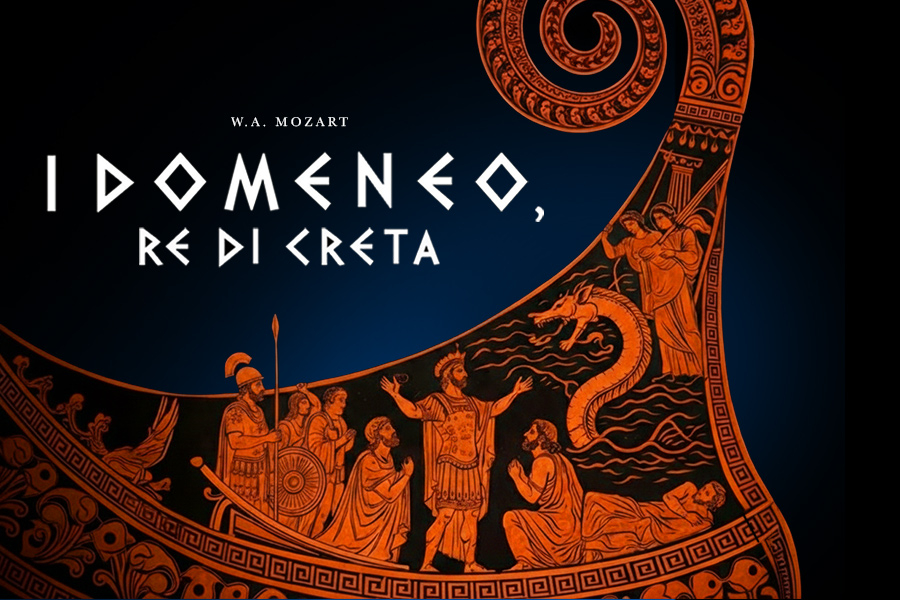
Idomeneo, re di Creta

opera by Wolfgang Amadeus Mozart

Performed in Italian (the performance will have synchronised Russian supertitles)
 

World premiere: 29 January 1781, Residenztheater, München
Premiere of this production: 30 January 2026


Running time 3 hours 20 minutes
The performance has two intervals

Age category: 12+

Credits

Music by Wolfgang Amadeus Mozart
Libretto by Giambattista Varesco

Musical Director: Valery Gergiev
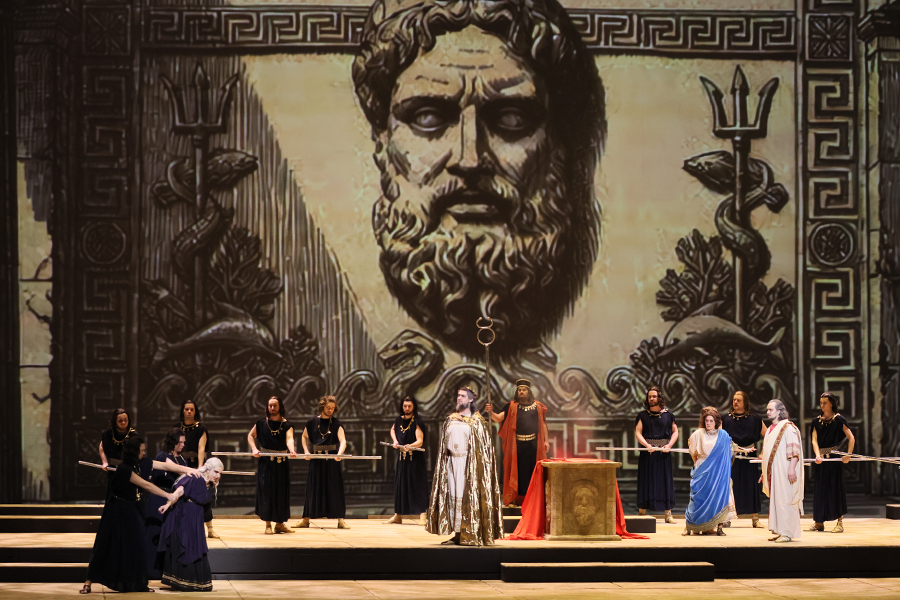
Stage Director: Roman Kocherzhevsky
Video Designer: Igor Domashkevich
Video production: the studio Show Consulting
Translation of the libretto, texts for video projections: Tatiana Belova
Costume Technician: Antonia Shestakova
Musical Preparation: Natalia Mordashova
Chorus Master: Pavel Teplov

SYNOPSIS

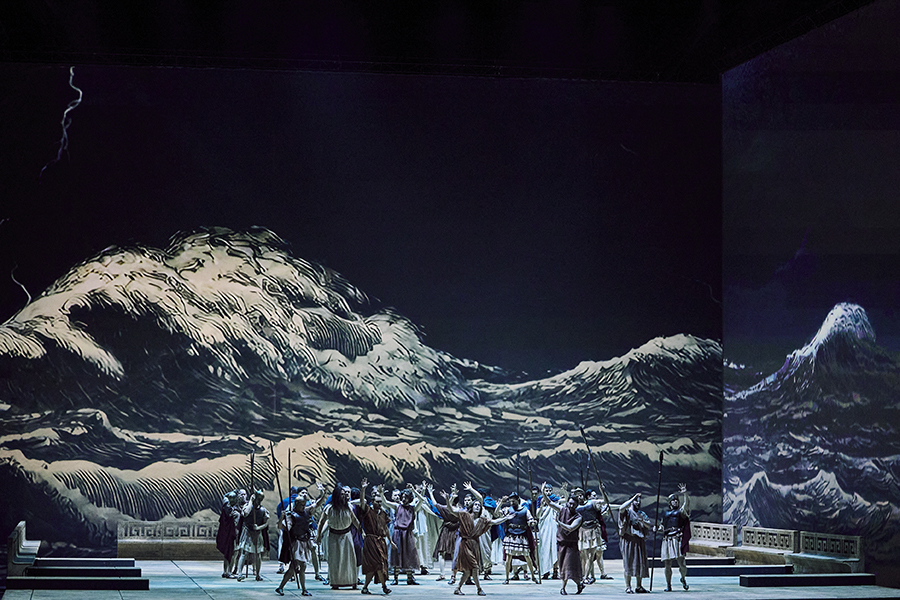
The action takes place after the end of the Trojan War. Idomeneo, king of Crete and one of the leading Greek commanders, has returned laden with rich spoils. Among his captives is the Trojan princess Ilia. Neptune, the god of the sea, unforgiving of the destruction of Troy’s walls and displeased with the sacrifices offered to him, thwarts the Greeks’ homeward journey: he unleashes storms, destroys ships and takes lives. Idomeneo’s fleet is scattered by a violent tempest; some ships reach Crete, while others vanish without a trace, their fate unknown.

Act I
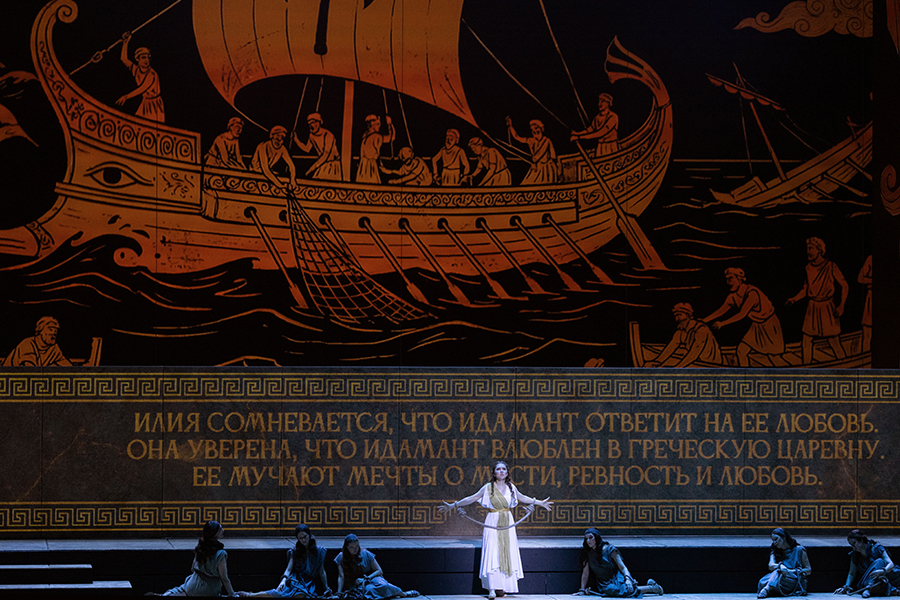
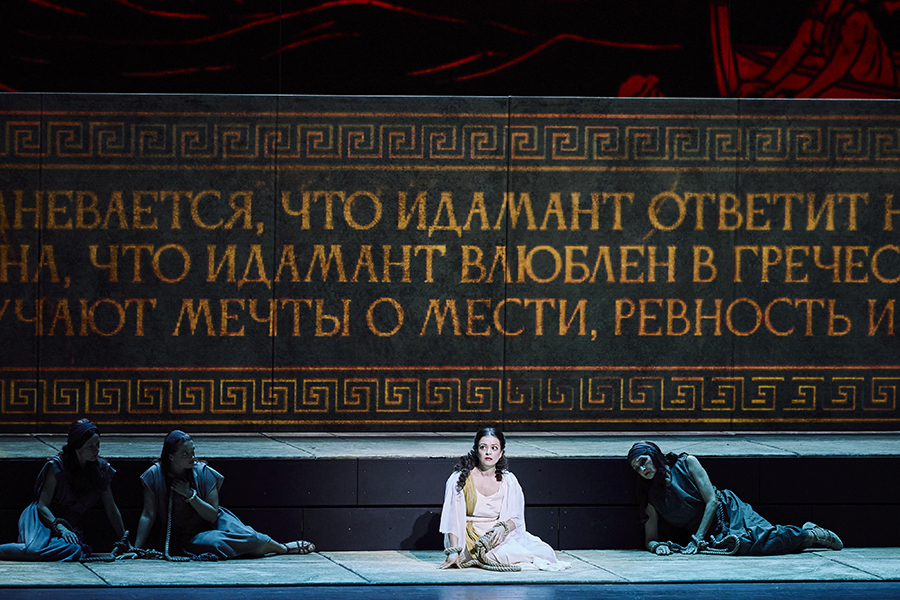
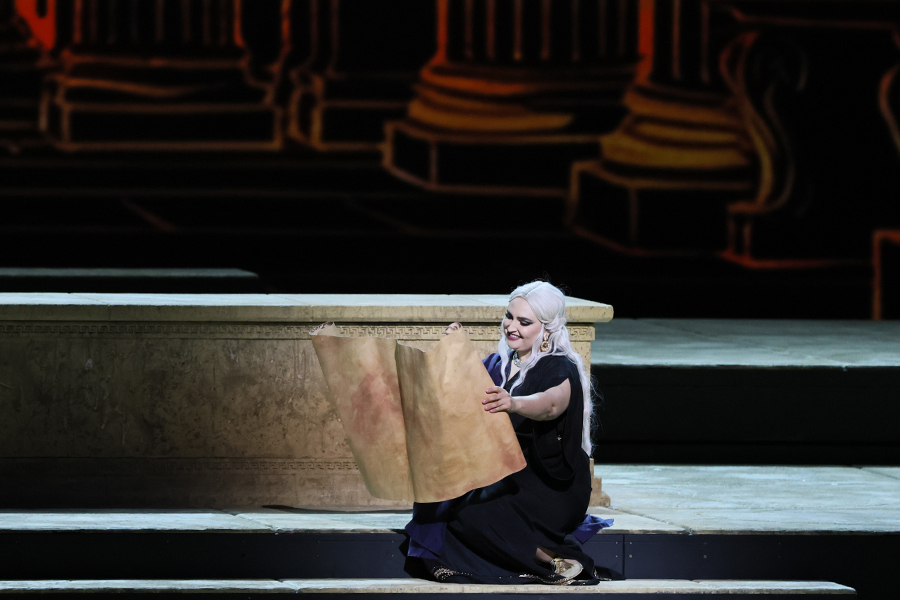
A ship carrying Trojan captives is wrecked near Kydonia, the capital of Crete. Prince Idamante and his men rescue the drowning Trojans. Ilia mourns Troy, her slain father and brothers, yet realises that Idamante, who saved her, has become dear to her heart. She reproaches herself for loving an enemy. Idamante appears; he has fallen in love with Ilia at first sight. He confesses his feelings and, for her sake, grants freedom to the Trojan captives. Ilia, however, does not dare to admit that his love is returned.
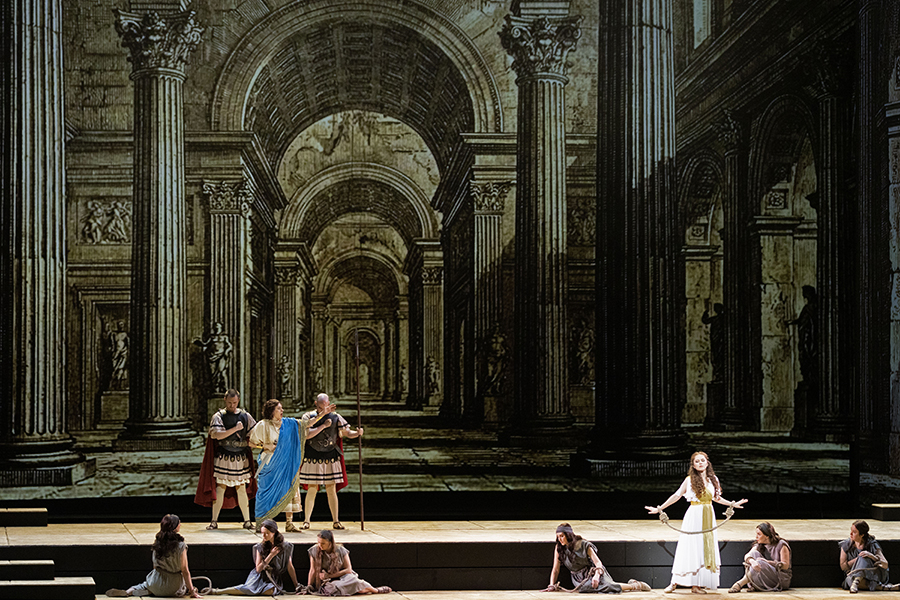
Elettra, daughter of King Agamemnon, who has fled from Argos to Crete, is also in love with Idamante. She hopes to marry him upon Idomeneo’s return. Arbace brings news of the king’s and his fleet’s supposed destruction. Idamante’s mercy toward Ilia arouses Elettra’s jealousy, while the report of Idomeneo’s death drives her to frenzy.
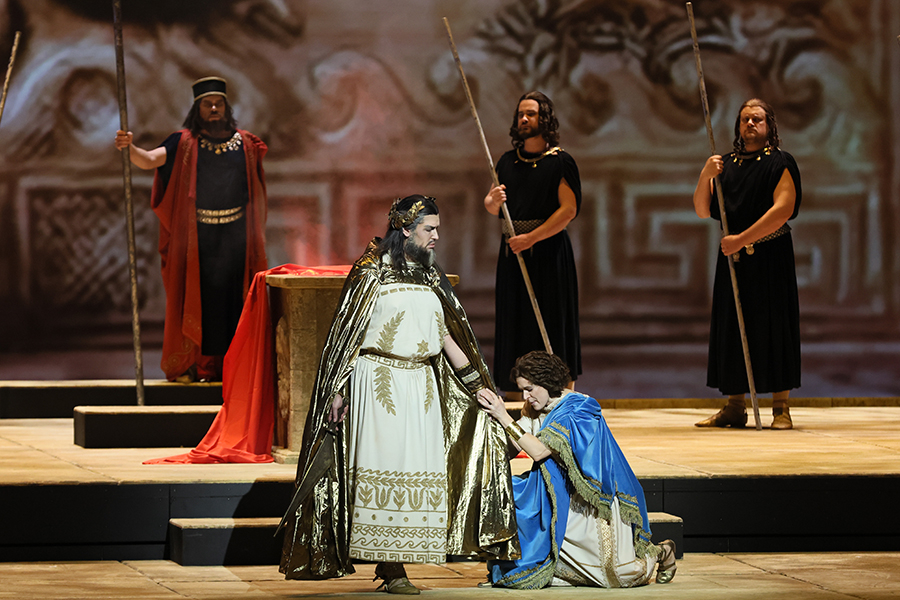
Idomeneo and his men have in fact survived the storm, but Neptune has exacted a terrible price for their salvation: Idomeneo must sacrifice the first person he encounters on shore. Idamante appears. Father and son do not immediately recognise each other, but when Idomeneo realises whom he has met, he curses the gods, disowns his son and forbids him to appear before him again. Idamante is plunged into despair.

Act II
Idomeneo reveals the truth about his vow to the faithful Arbace. Together they devise a way to save Idamante: to send him to Argos with Elettra. Arbace laments that he cannot serve his masters better.
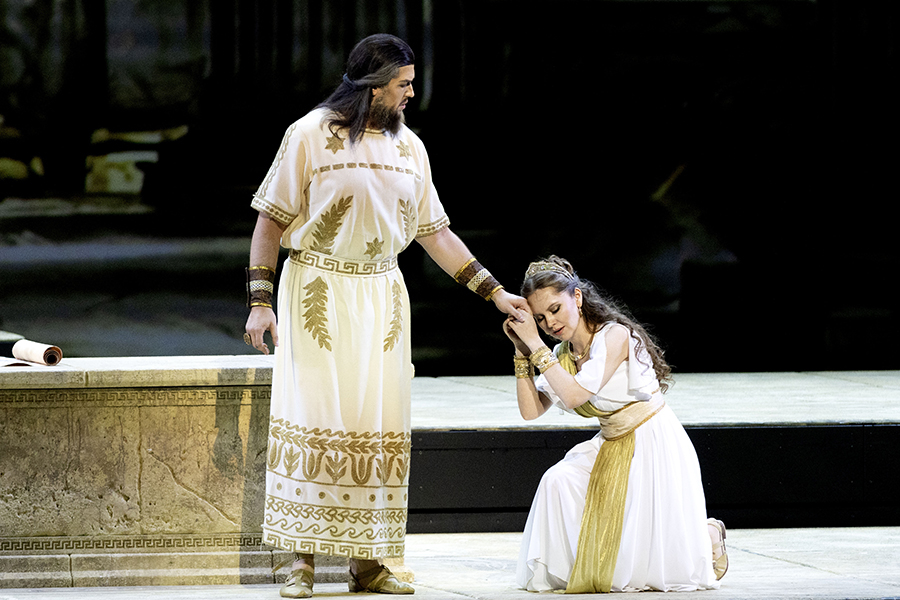
Ilia appears. She is ready to become a daughter to Idomeneo and to accept Crete as her new homeland. Idomeneo understands that Idamante’s death would also mean Ilia’s death and is tormented by the thought that his rash vow will claim further victims. The tempest in Idomeneo’s soul is more dreadful than the storm he has just survived.
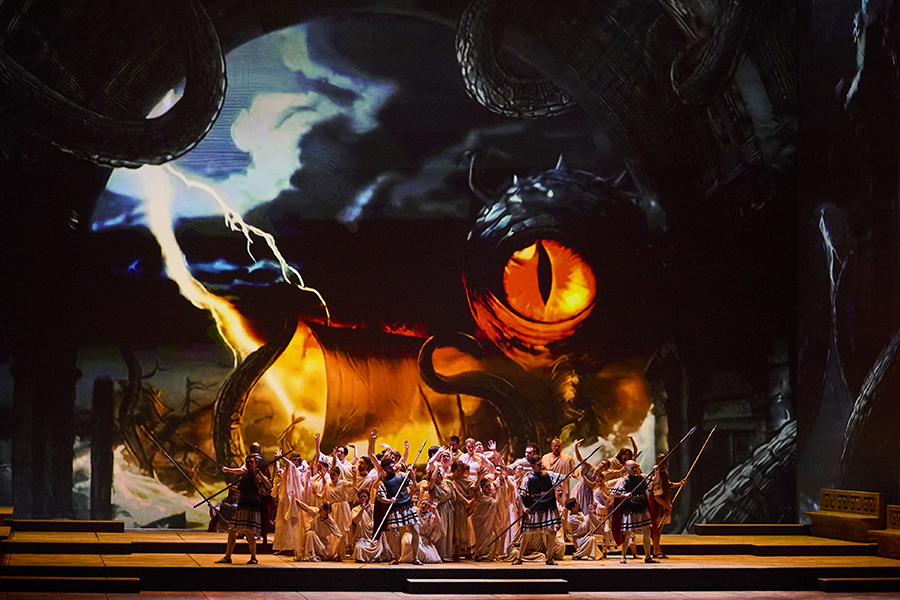
Elettra is overjoyed: she will leave Crete with Idamante, and far from Ilia he will forget his infatuation. Idamante reluctantly obeys his father’s command to leave his homeland. Yet they are unable to set sail. Enraged by Idomeneo’s attempt at deception, Neptune sends a monster to Crete that wreaks indiscriminate havoc. Idomeneo acknowledges his guilt but refuses to sacrifice the innocent.

Act III
Ilia and Idamante finally confess their love for one another. Idamante resolves to fight the monster and save Crete. Idomeneo still hopes to send Idamante to Argos with Elettra, but he is not ready to explain the true reason for his command. Idamante rushes toward what seems like certain death.
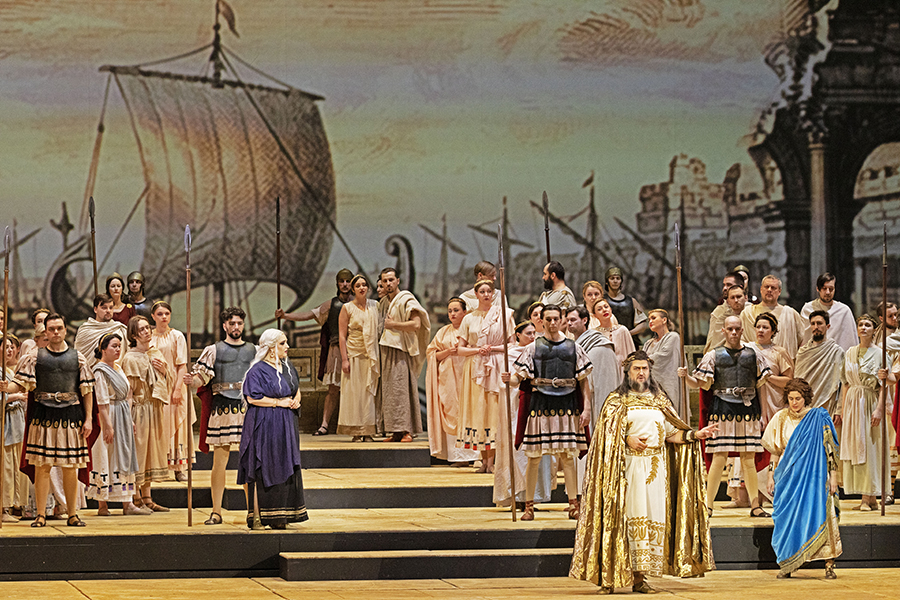
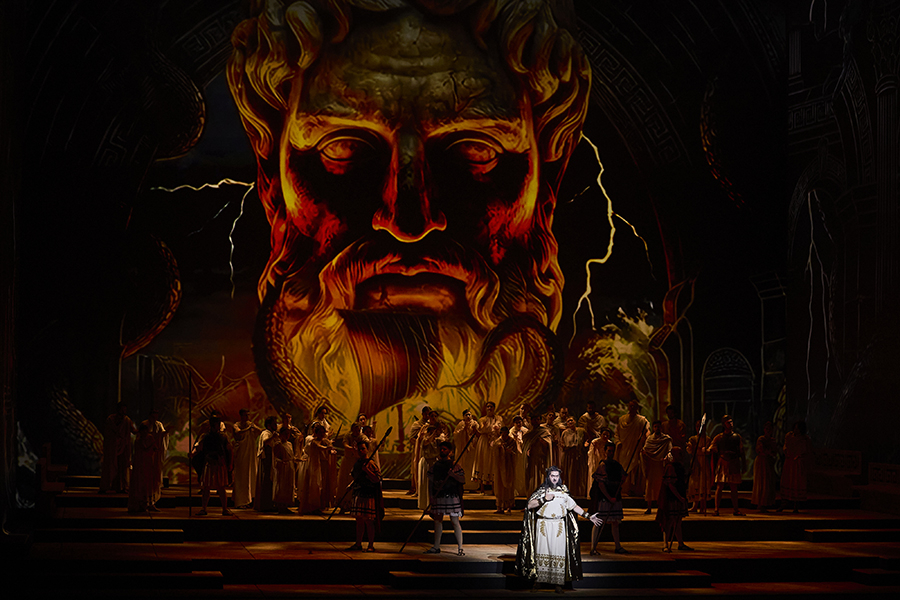
Accompanied by a crowd, the High Priest of Neptune approaches the palace, demanding to know the name of the one destined for sacrifice. Idomeneo confesses that his own son, Idamante, must be offered. Arbace bewails the fate of Crete.
The people of Kydonia rejoice: Idamante has slain the monster. But Idomeneo knows that this will not appease Neptune’s wrath. The sacrifice must be carried out, and Idamante is ready to die for his homeland.
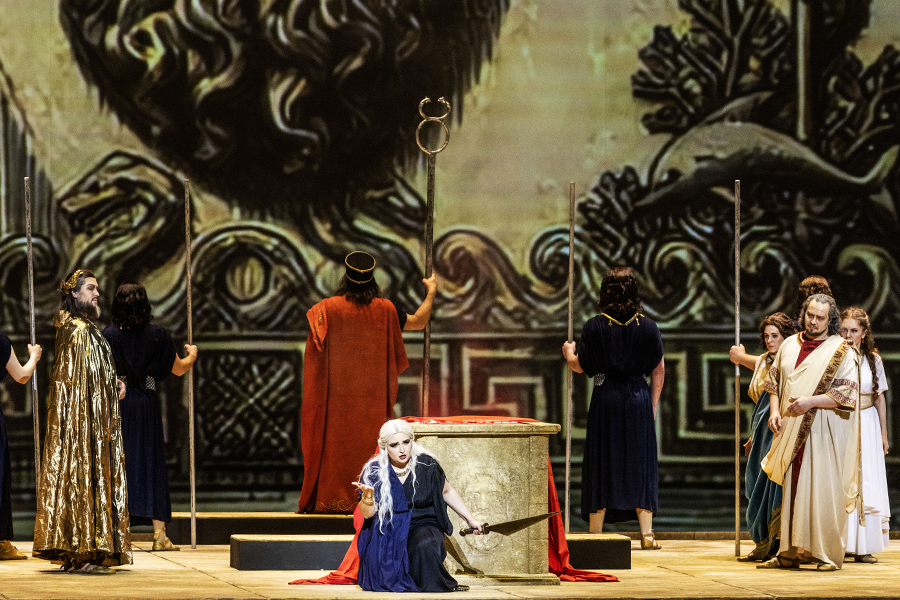
In Neptune’s temple all is prepared for the ritual. At the decisive moment Ilia demands that she be sacrificed in Idamante’s place. Innocence and love soften Neptune’s anger: Idamante and Ilia are spared, united in marriage and will rule Crete together, while Idomeneo must abdicate the throne.
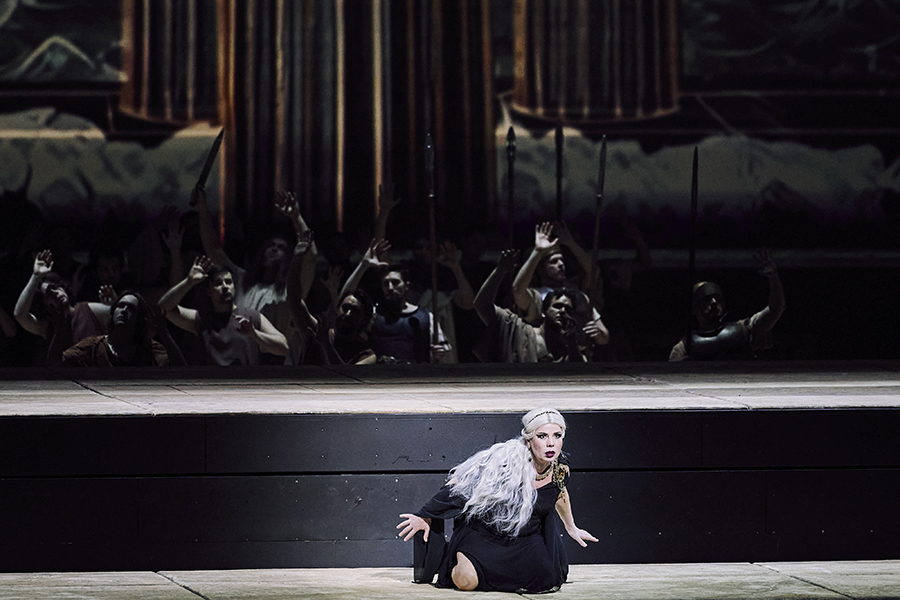
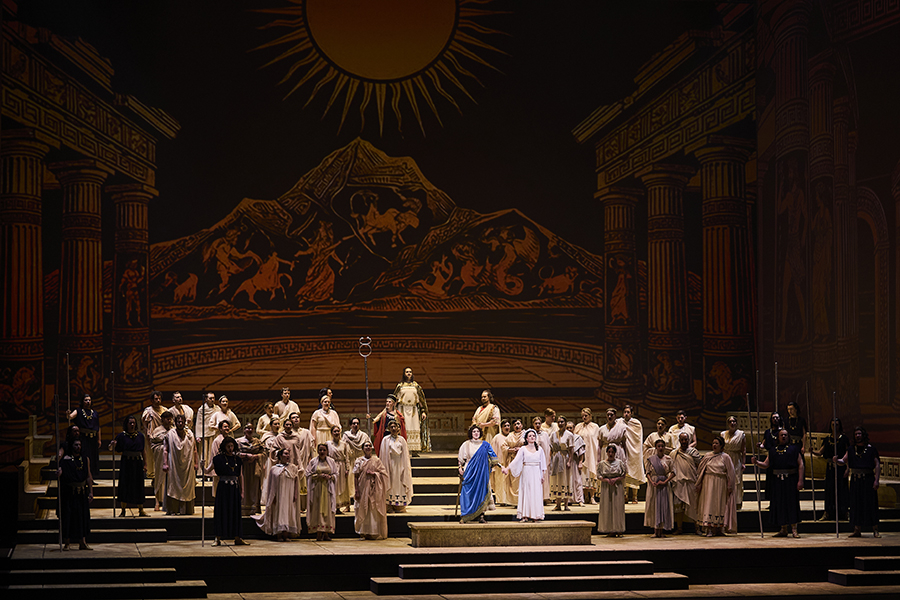
Elettra descends into madness. The Cretans celebrate the return of peace.

“The music of my opera is for people of any description, except those with excessively protruding ears,” Wolfgang Amadeus Mozart wrote to his father Leopold with pride about Idomeneo. And yet the destiny of this opera was to prove far from simple: the successful premiere in 1781, subsequent numerous productions in the 19th century… and the disappointed verdicts of connoisseurs made in the early 20th century the music is brilliant, but the traditional genre of Italian opera semi-seria had become hopelessly outdated. It was only in the latter half of the last century that the revival of Idomeneo began, and by our own time it had returned to theatres. The legend of the King of Crete, who had almost sacrificed his only won to the God Poseidon, was interpreted as a psychological drama and as an ancient tragedy, as a moral parable, as a play about the conflict of generations, as a surrealist performance about the interrelations of mortals with the otherworldly, as a hot political pamphlet…
Idomeneo is one of Mozart’s most courageous and innovative works. Typically, the composer did not break down the genre of the canon, though he did reinvent it from inside out. In the overture to the opera seria, trumpets and kettle-drums are typical – arguably, this is all plain and evident, but with Mozart the overture is not just a pompous introduction, it is a passionate poem about the resistance between Fate and a victim.
This opera seria consists mainly of high-note arias and occasionally interspersed ensembles; Mozart transformed this “concert in costumes” into a series of psychological portraits and dramatic dialogues. The outwardly shrewish but morally just captive girl Ilia is impossible to confuse with the furious and yet deeply suffering Elettra. Idamante’s stoic nobility denotes a character who is not at all stilted: the young prince is filled with a purely youthful joie de vivre. The dark abysses in Idomeneo’s soul are illuminated by his love for his son. All of these contrasts are spoken of in the ensembles: the tercet in Act II and, particularly, the quartet in Act III, where each of the heroes experiences his or her share of grief and suffering, and Fate predestines each and all of them.
The choral episodes imbue Idomeneo with a truly tragic scale, particularly in the scene of the sacrifice in Act III. Here Mozart openly makes reference to operas by Gluck and even, possibly, surpassed the older maestro in the sharpness of his dramatic feelings.
The traditional happy end with the deus ex machina is also not a given for the conditional opera poses. Here there is Mozart’s sincere belief that the true gods are fair and merciful, and Fate is not quite so blind as it sometimes seems. Larisa Kirillina


Idomeneo first appeared on the Mariinsky Theatre stage in the 2008–09 season. The universal nature of the myth allowed the Austrian creative team, led by director Michael Sturminger, to relocate the opera’s action to the present day. In recent years, as the Mariinsky Theatre has broadened the stylistic scope of its repertoire, it has increasingly turned to the music by Wolfgang Amadeus Mozart.
In 2022 Idomeneo returned to the repertoire and was performed regularly at the Concert Hall in semi-staged versions. Several casts of singers have mastered the exceptionally demanding roles of Mozart’s opera seria in its various editions.
In 2026, 245 years after its world premiere, the Mariinsky Theatre brings Idomeneo to the grand stage of Mariinsky II.

Any use or copying of site materials, design elements or layout is forbidden without the permission of the rightholder.
user_nameExit

The highlighting of performances by age represents recommendations.

This highlighting is being used in accordance with Federal Law N436-FZ dated 29 December 2010 (edition dated 1 May 2019) "On the protection of children from information that may be harmful to their health"