



Bastien: Klim Tikhonov
Bastienne: Kristina Gontsa
Colas: Anatoly Mikhailov
Oxana Klevtsova (piano)
Running time: 50 minutes
The performance has no interval
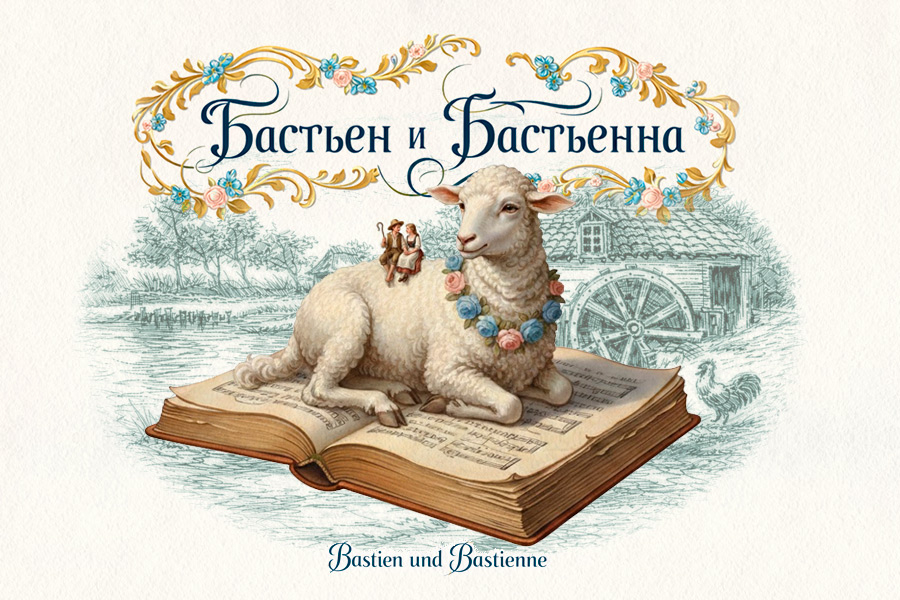
The one-act singspiel Bastien und Bastienne stands as a charming work of a child prodigy: Mozart composed it at the age of just twelve. In 1768 the young genius visited Vienna and attended the premiere of Jean-Jacques Rousseau’s comic opera Le Devin du village, which enjoyed tremendous success in elite social circles. Its appeal lay in a new philosophy that celebrated simple life in harmony with nature and rejected the cult of cold reason in favour of feeling.
Rousseau’s characters became role models. Even the most refined aristocrats embraced the motto “Back to nature!” Pastoral fashion extended beyond clothing into everyday life: noblewomen kept sheep as pets, established small dairy farms where they milked cows themselves, cultivated gardens and orchards, and proudly treated one another to the fruits of their own labour.
Whether the young Mozart fully absorbed Rousseau’s ideals of the “golden age” remains uncertain; more likely he was captivated by a cheerful tale about two lovers aided by a clever, slightly charlatan-like sorcerer. Bastien und Bastienne abounds in rustic humour. Its music draws on popular genres while displaying unmistakable Mozartian refinement. Nadezhda Kulygina





| user_name | | Exit |

The highlighting of performances by age represents recommendations.
This highlighting is being used in accordance with Federal Law N436-FZ dated 29 December 2010 (edition dated 1 May 2019) "On the protection of children from information that may be harmful to their health"


