





World premiere: 24 December 1871, Khedivial Opera House, Cairo
Premiere at the Bolshoi (Kamenny) Theatre: 19 November 1875, Imperial Italian Opera Company
Premiere at the Mariinsky Theatre: 1 April 1877, Imperial Russian Opera Company (performed in Russian, translated by Grigory Lishin)
Premiere of this production: 7 February 2025
Running time: 3 hours
The performance has one interval
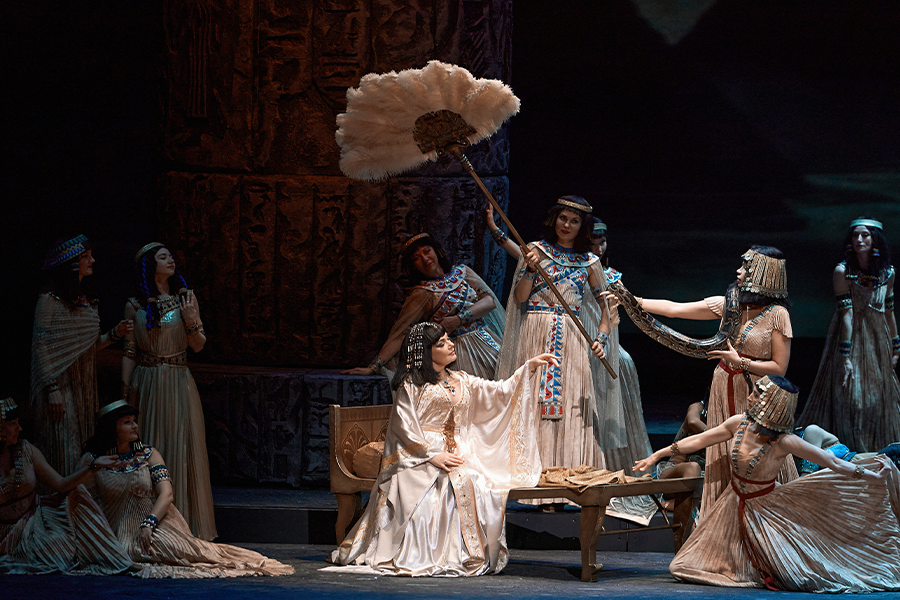
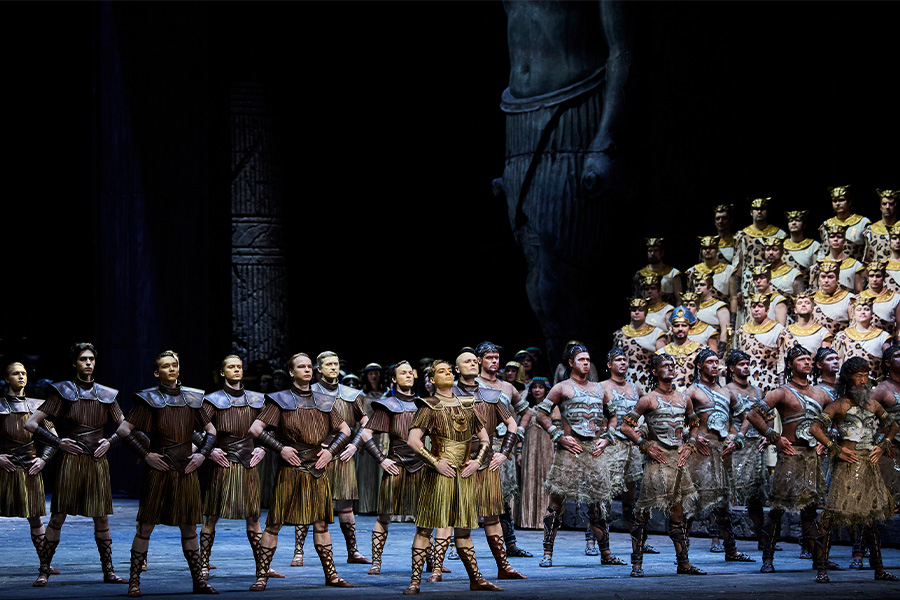
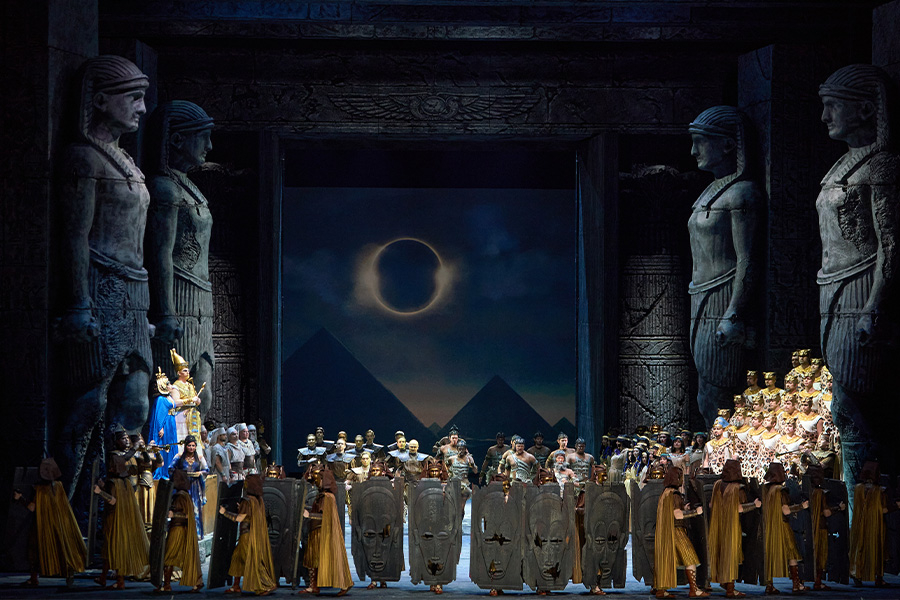
When Giancarlo del Monaco and his creative team were invited to stage Aida at the Mariinsky Theatre, they chose a path midway between tradition and modernity, between a literal realisation of Verdi’s stage directions and a contemporary reimagining of the opera.
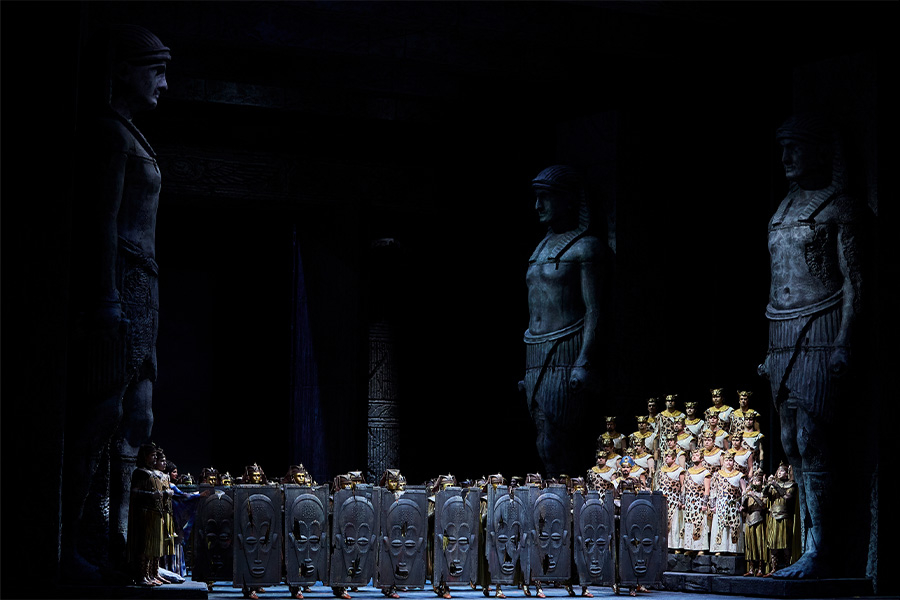
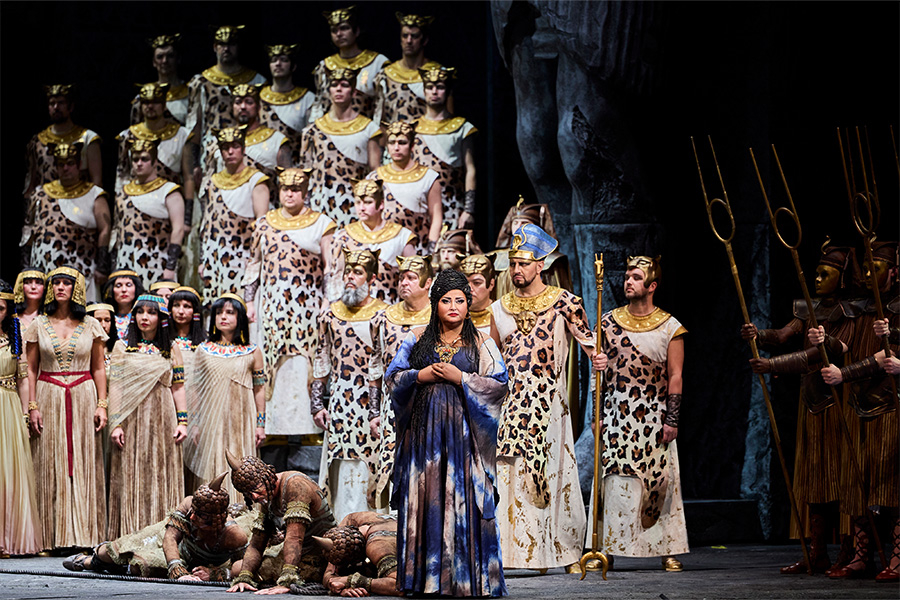
Verdi did not specify the exact period in which Aida takes place, referring only broadly to “the age of the Pharaohs”. This left the production team free to establish its own historical setting. They chose the era when ancient Egypt came under the rule of conquerors from Nubia, in what is now Sudan, and Black Pharaohs ascended the Egyptian throne in the eighth and seventh centuries BC.
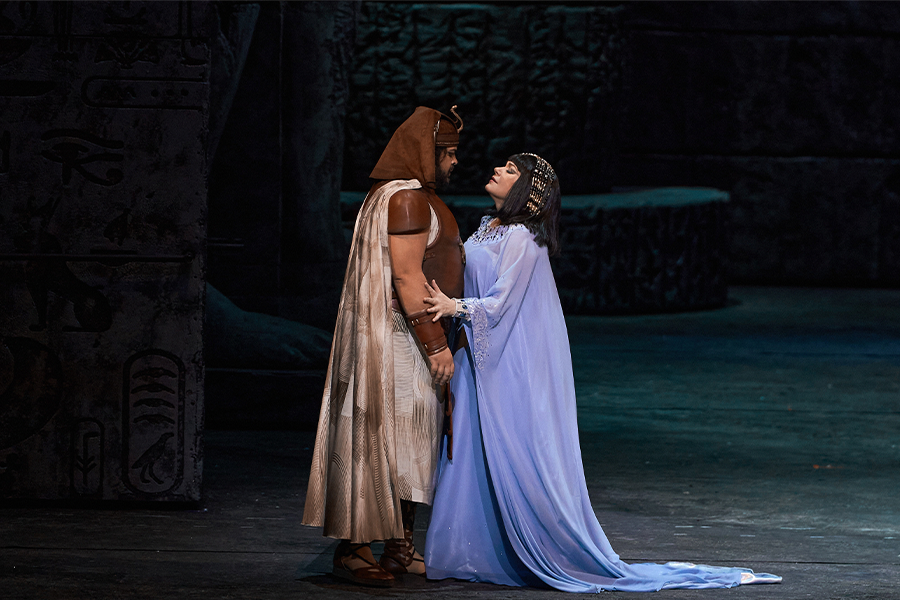
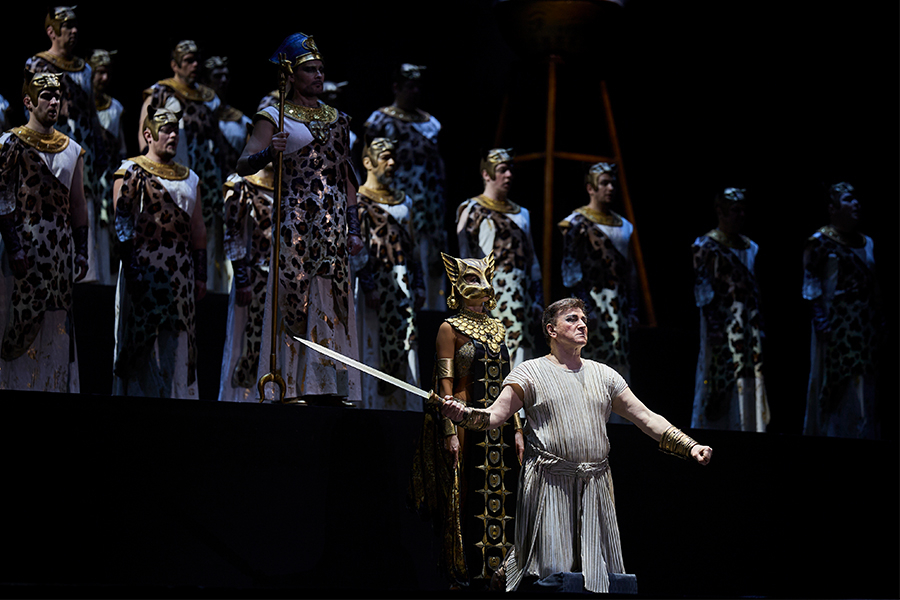
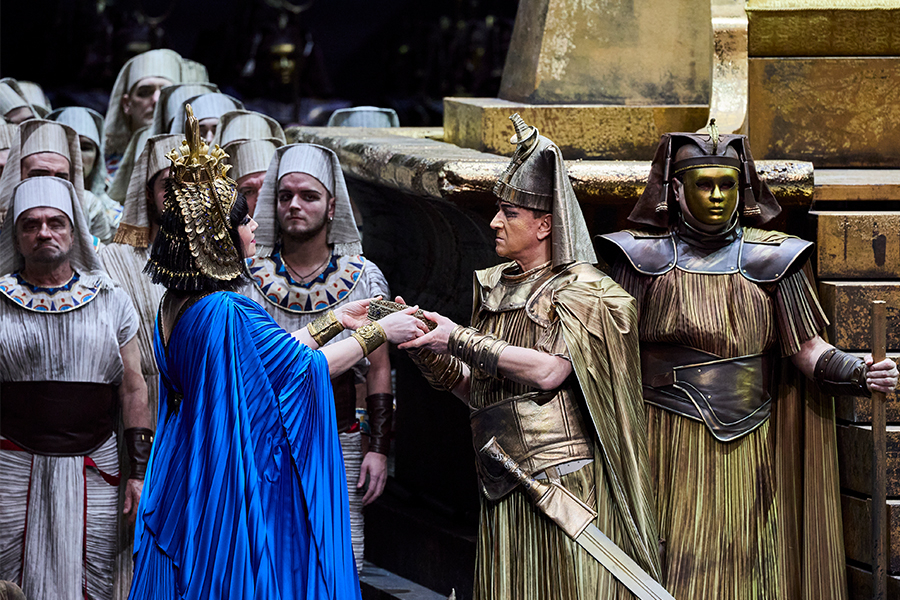
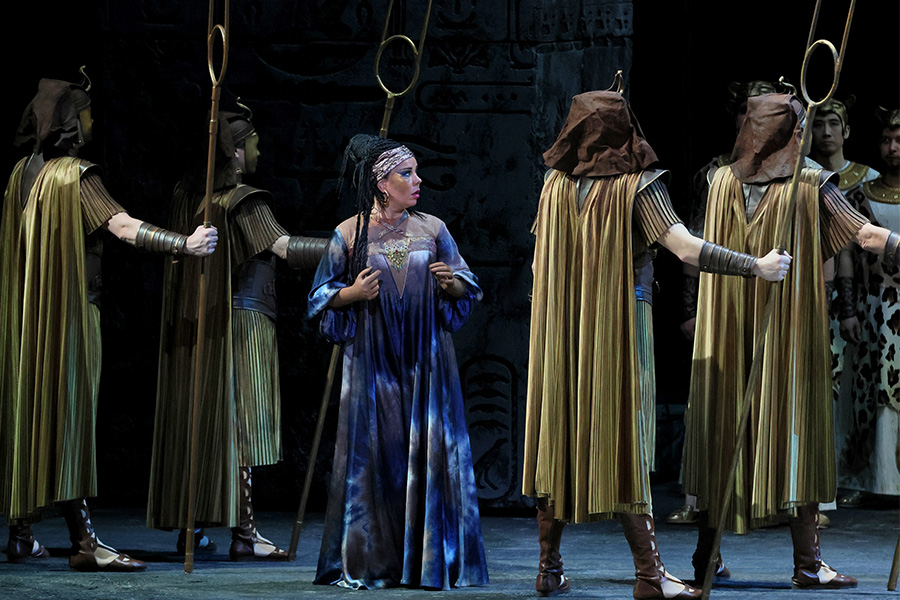
Black, in all its tonal richness, became the defining element of the production’s visual world. Set designer Antonio Romero drew inspiration from archaeological artefacts, particularly basalt slabs covered with hieroglyphs and statues carved from black volcanic stone. The stage appears to lie beneath a fine layer of ash, scattered with glinting fragments of glass. Black is not used in the makeup, however: Aida’s complexion, for example, is rendered in olive tones.
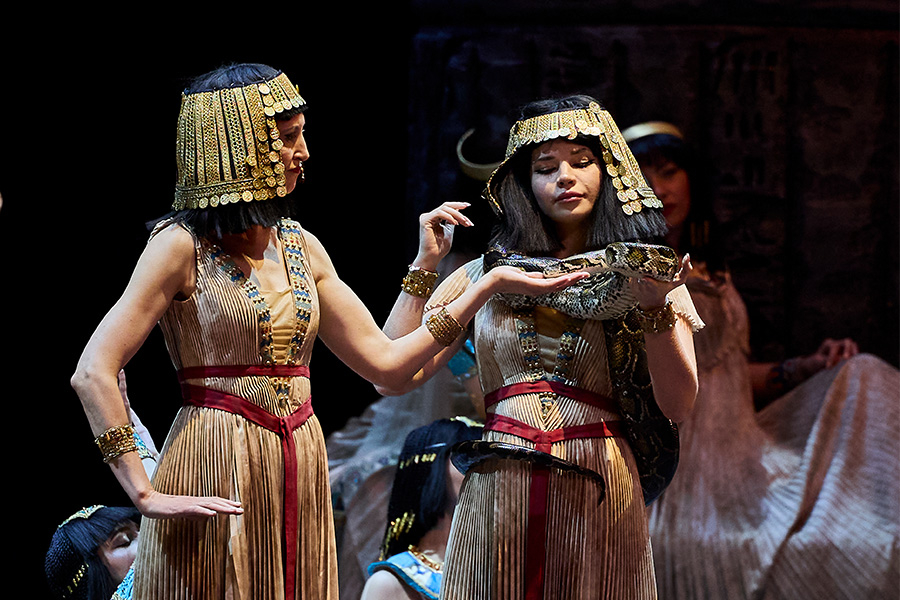
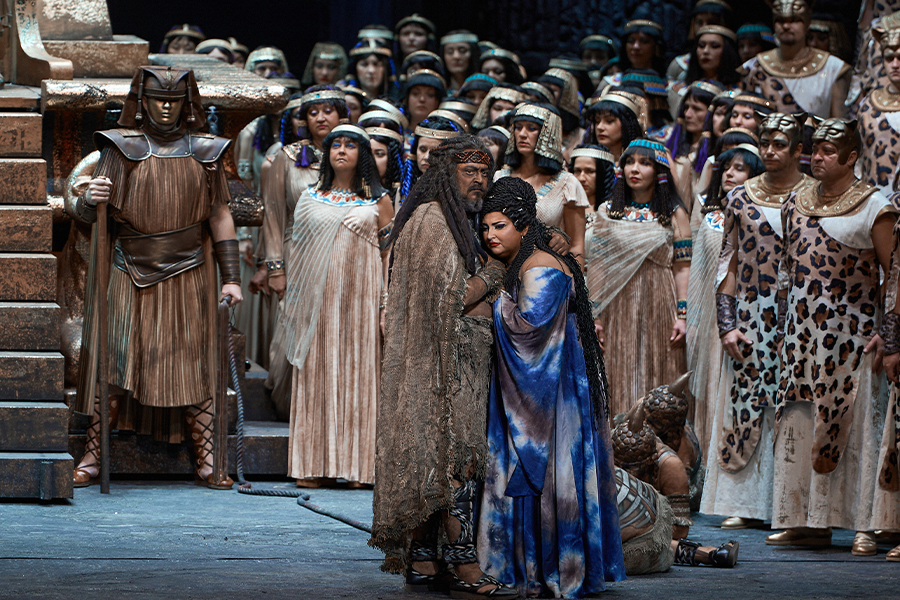
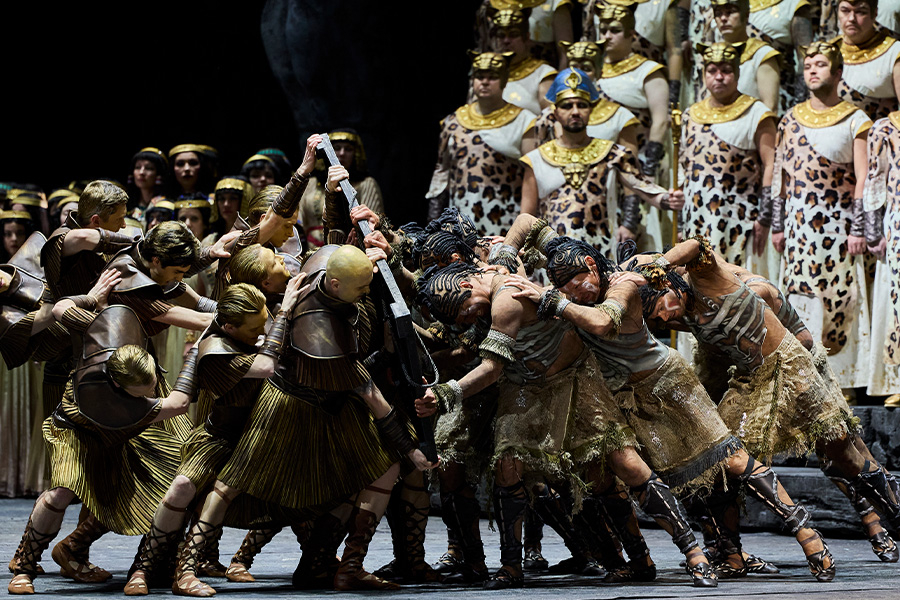
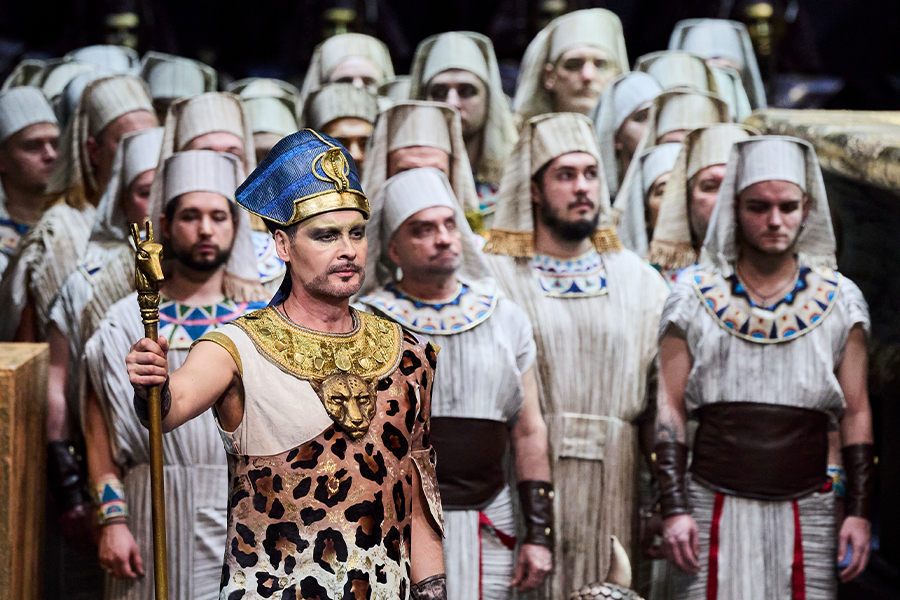
Del Monaco approaches Aida as both a grand Romantic opera and an intimate psychological drama. Although the work received its first performance in a comparatively small theatre in Cairo, Verdi conceived it from the outset on a monumental scale, as a vast dramatic canvas filled with crowds. Del Monaco’s production embraces that original vision. Its massed scenes unfold with full theatrical splendour, culminating in a Triumphal March inspired by images of the celebrated 1945 Victory Parade in Moscow’s Red Square. Gabriela Salaverri’s costumes do not reproduce ancient Egyptian images literally but reinterpret them with imaginative freedom. Golden tones in the Egyptian dress stand out against the production’s austere black-and-grey palette.
The son of the renowned tenor Mario del Monaco, Giancarlo del Monaco grew up immersed in the world of opera. His production reflects both an instinctive understanding of the art form and an intimate knowledge of Verdi’s score. Yet the personal tragedy of individuals caught in the machinery of great-power politics concerns him even more deeply than the politics themselves. The production moves swiftly between two dramatic planes: the public and epic, and the private and psychological. Mobile sets allow these shifts to take place with remarkable speed. The Mariinsky Theatre artists not only realise the director’s vision with precision but also bring their own individual colour and insight to the characters they portray.
The production of Aida premiered at Mariinsky II on 7 February 2025 and became one of the major events of the season. Audiences and critics alike recognised its distinction. It subsequently received Russia’s highest theatre honour, the Golden Mask Award, in the category “Best Production: Opera”. Khristina Batyushina
The production received the Golden Mask Russian National Theatre Award as Best Opera Production of the 2024–2025 season





| user_name | | Exit |

The highlighting of performances by age represents recommendations.
This highlighting is being used in accordance with Federal Law N436-FZ dated 29 December 2010 (edition dated 1 May 2019) "On the protection of children from information that may be harmful to their health"


