



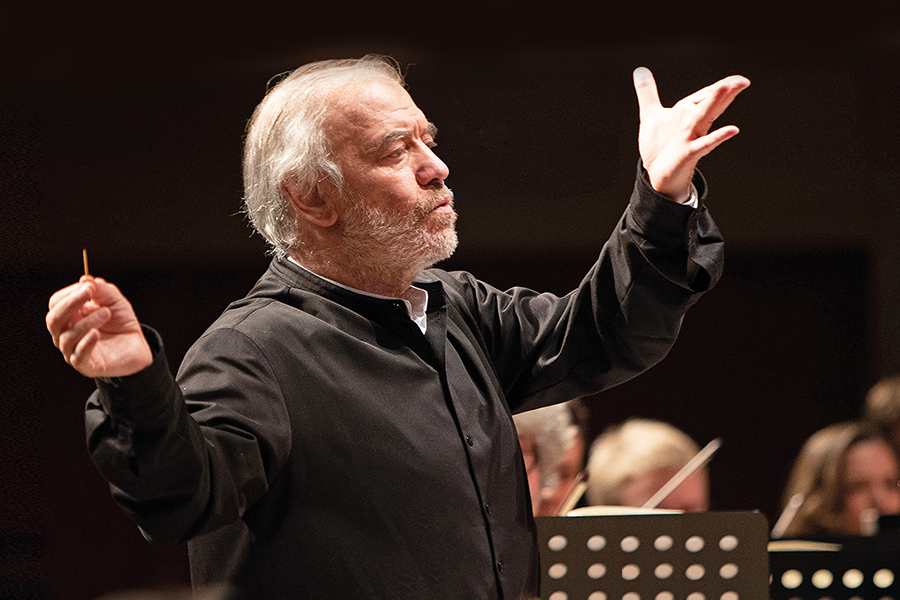
opera by Richard Strauss (III act, concert performance)
PERFORMERS:
The Dyer’s Wife: Xeniya Grigorieva
Barak: Edem Umerov
The Empress: Zhanna Dombrovskaya
The Emperor: Roman Shirokikh
The Nurse: Olga Savova
The Mariinsky Orchestra
Conductor: Valery Gergiev
PROGRAMME:
Richard Strauss
Die Frau ohne Schatten (III act, concert performance)
Musical Preparation: Oxana Klevtsova
Chorus Master: Nikita Gribanov
Children’s Chorus Master: Irina Yatsemirskaya
Act III
The first trial has been completed, and those who have completed it set out for The Spirit Realm. The boat with the Empress and the Nurse arrives at the gates of the Temple. She knows: she is being called to judgement. In the depths, utterly unaware of one another, Barak and his Wife are struggling in their confinement. The voice of one of the spirits calls them upwards. They rise and think of one another with tenderness: he forgiving her, and she begging forgiveness, humbly and, for the first time, lovingly. They rise above, trying to find each other. Here they meet the Nurse, standing before the closed gates of the Temple. The messenger of the spirits guards the entrance from her. She is infuriated. The Empress is standing in the depths of the Temple and awaits the court. But who is it that will judge her? Is it the King of Spirits, her stern father? A curtain screens his face. The Empress’ courageous supplication goes unanswered. There is only the gentle gurgling of the water of the Golden Source, the Source of Life.
‘‘Drink,’’ says a voice, ‘‘Drink, and the Wife’s shadow will be yours.’’ The Empress hears the voices of the separated man and wife and steps back without having let her lips touch the Golden Source. The waters recede. The Emperor sits upon a stone throne, unmoving, turned to stone. It is only in his eyes, it would appear, that life still lingers. The Source of Life again begins to ring out at the statue’s feet. Sweet voices from above can be heard: ‘‘Say ‘I want it’ and the woman’s shadow will be yours, it will rise, come to life and go with you.’’ The Empress freezes to the spot, battling with her own self. The barely heard words ‘‘I don’t want it!’’ at last come from her lips. She is victorious, as the mother before the throne of Solomon was victorious, prepared to lose her child that he might live. She is victorious for her own self and for the sake of one who would, without her self-sacrifice, otherwise remain petrified forever. And for the sake of two others who, having suffered so much, must rise upwards. A distinct shadow falls on the floor of the Temple. The voices of the unborn children can be heard rejoicing.





| user_name | | Exit |


